


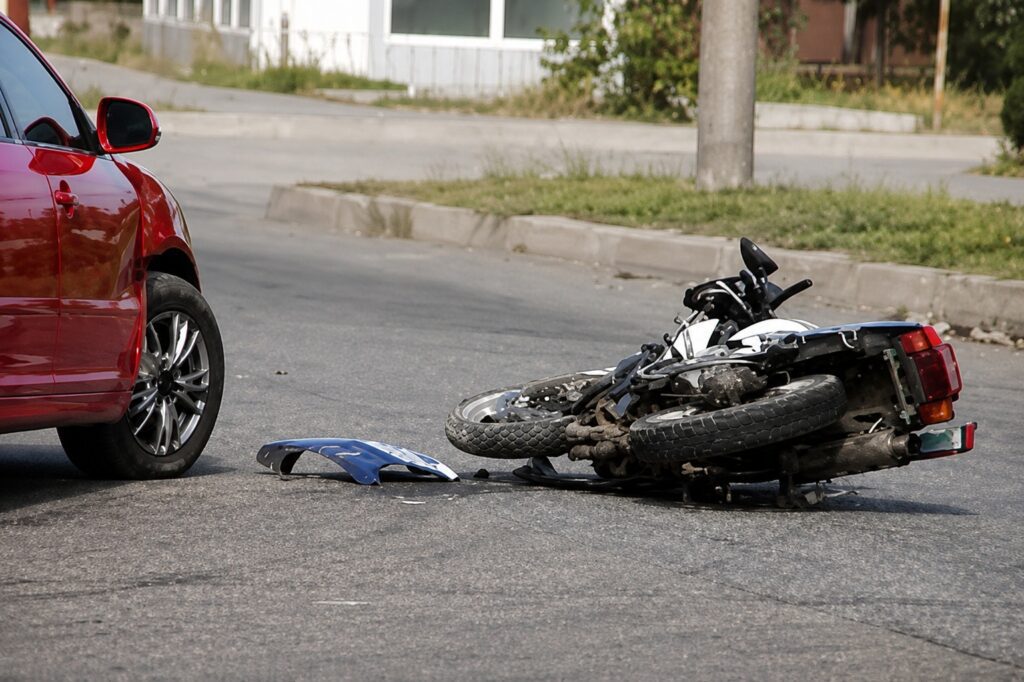
A boda boda accident can leave you with medical bills, lost income, and sometimes a long-term disability. If someone else caused the accident through their own carelessness, Kenyan law lets you claim compensation. But this does not happen automatically. You have to prove who was at fault and prove what you lost. Here is how the process works, step by step.
1. Figure Out Who Was at Fault
Before anything else, you need to show how the accident happened and who caused it. Courts do not hand out compensation just because someone got hurt. You have to show that the accident happened because of someone’s negligence.
This is where evidence matters. Useful evidence includes:
- The police abstract
- Statements from witnesses
- Photos or video of the scene
- Your medical records
- The motorcycle’s registration details
Your evidence should show what the rider did wrong. Maybe they were speeding. Maybe they overtook dangerously. Maybe they simply lost control of the bike. Kenyan courts look closely at the facts of each case. They will not just assume you deserve a certain amount because of the type of injury you have. You need to back it up.
2. Report the Accident to the Police
Report the accident to the police as soon as you can, ideally the same day. Go to the station and get an entry made in the Occurrence Book. This gives you an OB number. From there, you can apply for a Police Abstract, one of the most important documents in your claim.
If anyone was hurt, ask for a P3 form too. This is a police document that a doctor fills in to record how badly someone was injured.
Keep in mind, the abstract alone does not prove the other person was negligent. What it does is create an official record of what happened and when. This record supports your case alongside witness statements and medical evidence. Make sure the police record the motorcycle’s registration number and the rider’s details correctly, and keep copies of everything for yourself.
3. Get Medical Treatment and Save Every Record
Your medical records are what link the accident to your injuries. See a doctor as soon as possible and hold on to everything: treatment notes, medical reports, hospital bills, pharmacy receipts, test results, and records from any follow-up visits.
These documents help you claim for pain and suffering, medical costs, and future treatment if needed. They can also prove a permanent disability and show how it affects your ability to work.
One thing worth knowing: Kenyan courts treat “loss of future earnings” and “loss of earning capacity” as two different things. Loss of earnings is proven with your payslips or business records. Loss of earning capacity needs medical and job-related evidence showing your injury has permanently limited what work you can do. You cannot use one type of evidence for both.
4. Find Out Who Owns the Motorcycle and Who Insures It
Next, find out who owns the boda boda and whether it is properly insured. Motorcycle owners in Kenya are required by law to carry insurance for their bike. The main law here is the Insurance (Motor Vehicles Third Party Risks) Act, known as Cap 405. This is different from the general Insurance Act (Cap 487), which covers the insurance industry as a whole rather than motor accident claims specifically.
If the boda boda works commercially and carries paying passengers, it should also have Passenger Legal Liability cover, often called PLL, on top of the basic third-party cover. PLL is what pays out specifically for injuries to passengers.
You can usually find this information through the police investigation and the motorcycle’s registration. But keep this in mind: just because a bike is insured does not mean the insurer will pay automatically. You still need to prove your claim, and the law sets limits on what the insurer actually owes.
5. Notify the Insurer and Prepare Your Claim
Once you know who the insurer is, contact them and send your accident and medical documents. Your claim should lay out clearly what happened, who was involved, what injuries you suffered, and how much you are asking for. Attach your supporting documents.
Many claims start with a formal demand letter. This is a notice sent through a lawyer telling the insurer or the motorcycle owner that you plan to sue if they do not respond within a set time.
Do not sign a settlement just because an insurer offers you quick money. Think it through first. Consider how serious your injuries are, what your doctor expects for recovery, what you have already spent, and how the injury might affect your future income. Once you accept a settlement, you usually cannot go back and ask for more, even if your condition gets worse later.
If your property was damaged instead, say your car was hit by a boda boda, the process usually runs through your own insurer first. Get a police abstract that clearly states who was at fault and lists the other party’s insurance details. Take this to your own insurer and ask them to write a referral letter to the boda boda’s insurer.
From there, the other insurer usually gives you two options. They can repair your vehicle at their own approved garage, treating you almost like their own customer. Or they can let you pay for repairs yourself and reimburse you later. The first option is usually faster and easier, since it is arranged directly between the two insurers. It is generally worth pushing for that option instead of paying out of pocket and waiting to be repaid.
6. Know What You Can Actually Claim
How much you can recover depends entirely on your injuries, your losses, and the evidence you have. There is no set payout for a boda boda accident. Every case is different.
You can generally claim general damages, which cover pain, suffering, and the loss of things you used to enjoy doing. You can also claim special damages, which cover specific costs you can prove with receipts. If your injury is serious enough to affect your ability to work, you may also be able to claim for lost earnings, lost earning capacity, or future medical costs, as long as you have the paperwork to back it up.
If someone dies in the accident, the rules change. Their dependants can claim under the Fatal Accidents Act for loss of financial support, usually calculated by looking at the deceased’s income and how many people relied on it. Separately, the deceased’s estate can claim under the Law Reform Act for their pain and suffering before death and for the loss of the rest of their expected life, though this is usually a smaller amount if death happened quickly. Kenyan courts have made clear that these two types of claims exist side by side. One does not simply cancel out the other.
7. Do Not Wait Too Long
Start your claim as soon as you reasonably can. Under Section 4(2) of the Limitation of Actions Act, you generally have three years from the date of the accident to bring a claim. After that, the law usually will not let you sue. Courts can sometimes extend this in special situations, but you should not count on that happening.
Also, negotiating with an insurer does not pause this three-year clock. Some people spend years going back and forth with an insurer, believing their claim is “in progress,” only to find out later that the time limit has already passed. Do not let that happen to you.
8. Settle the Claim or Go to Court
Not every claim ends up in court. If both sides agree on who was at fault and how much compensation is fair, you can settle without a trial. But if there is a disagreement, you may need to file a case, usually in a magistrate’s court or the High Court depending on how much money is involved.
One recent change is worth knowing about. In January 2026, the High Court ruled that the Small Claims Court can no longer handle personal injury claims from road accidents. This means these cases now need to go through the regular court process instead of the faster, simpler Small Claims Court system.
You may also hear about the Insurance Appeals Tribunal. This body deals with complaints against how the Insurance Regulatory Authority or an insurer has handled things. It is not the place to bring a straightforward compensation claim for negligence. That still belongs in the regular courts.
A lawyer can help you gather the right evidence, identify who to sue, get proper medical reports, work out how much to claim, and make sure you file everything before the three-year deadline.
The Bottom Line
Claiming compensation after a boda boda accident takes more than just reporting it or calling an insurance company. Here is the short version of what to do:
- Report the accident and get a police abstract and P3 form
- Get medical treatment and keep every record
- Identify the rider, the owner, and the insurer
- Write down and document every financial loss
- Send a formal demand to the insurer
- Talk to a lawyer before accepting any settlement
Above all, do not delay. Evidence gets harder to find as time passes, and the law only gives you three years to bring a tort claim. Since every case is different, anyone chasing serious compensation should get their situation reviewed by a qualified Kenyan advocate before signing anything or letting time run out.
This article is for general information only. It is not a replacement for advice from a qualified advocate about your specific accident.
